
Wood-Destroying
Pest Control
Termites, carpenter ants, and powderpost beetles damage your home silently, often for years before you notice. We stop them before the damage becomes a disaster.
- Veteran-Owned Business
- Licensed & Insured in NC
- Satisfaction Guaranteed
- Serving the Triangle Since 2011
Carpenter Ant
Control
Carpenter ants don’t eat wood, they excavate it to build galleries. Satellite colonies often nest inside walls near moisture-damaged wood; the parent colony may be outdoors in a stump 100+ feet away.
Eliminating carpenter ants requires treating both the interior satellite colony and the exterior parent colony. Treating only the interior provides temporary relief, the parent colony keeps producing workers that repopulate the structure.
- Satellite colony identification inside walls
- Parent colony location and exterior treatment
- Perimeter spray
- Moisture source identification (the root cause)
- Annual monitoring programs available
Termite
Control & Prevention
We offer long-lasting exterior soil treatment programs designed to protect your property for up to five years. Which includes a full one-year warranty, with flexible yearly renewal options available to keep your coverage active for the long haul.
- Free termite quote
- One year warranty
- Exterior soil treatment programs
- WDIR issued for real estate transactions
- Renewable warranty with annual inspection
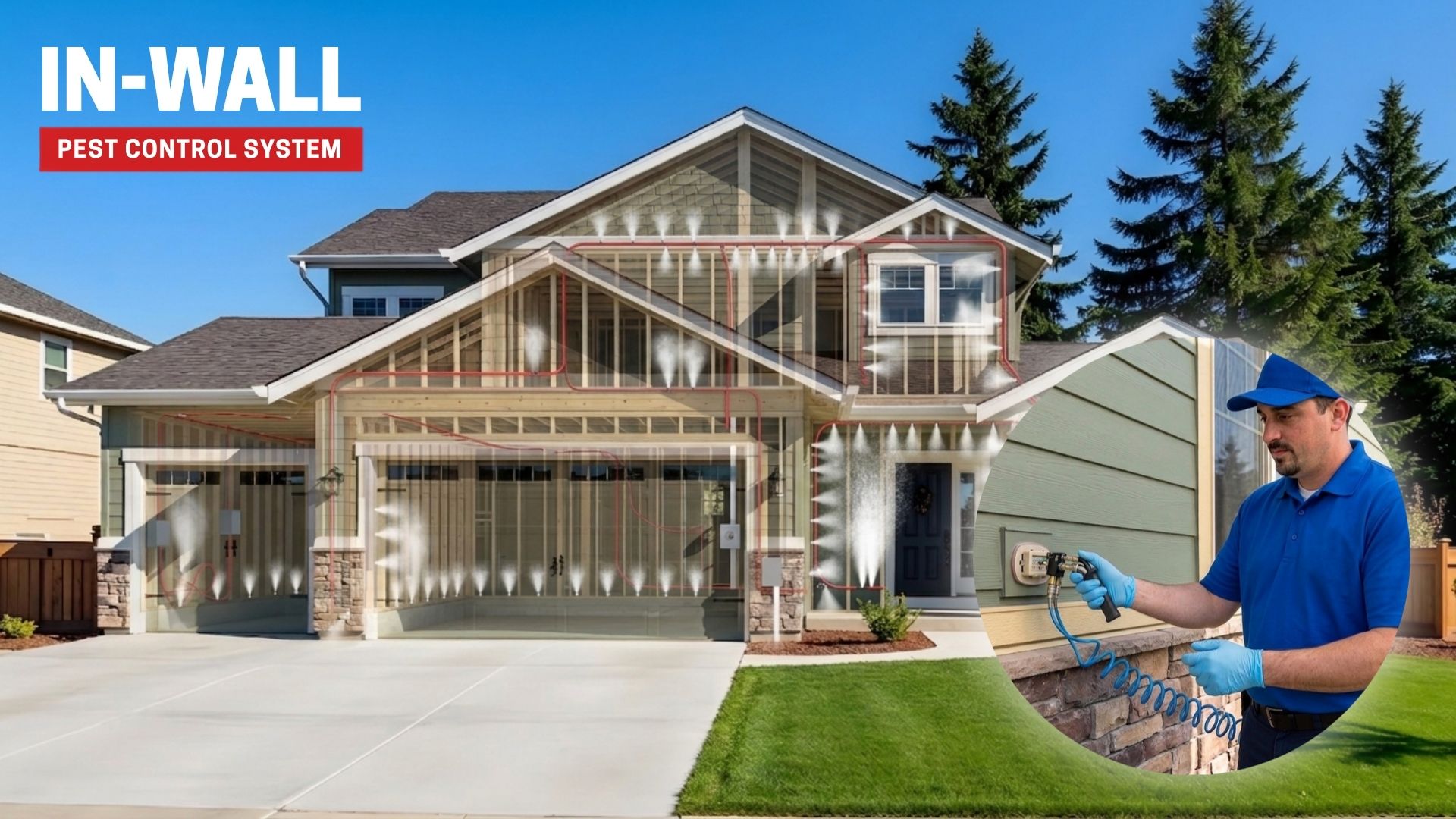
The Tube-in-the-Wall
System
Discreet access ports installed in your walls allow annual retreatment of the structure’s interior without trenching, drilling through concrete, or any cosmetic damage. Termiticide is injected directly where termites travel, creating a complete internal barrier.
- No exterior trenching or drilling required
- Discreet ports blend into baseboards
- Annual retreatment takes under 2 hours
- Compatible with new construction and existing homes
- Renewable warranty included
Powderpost Beetle
Control
Powderpost beetles are the second most destructive wood-destroying insect in the U.S. Their larvae bore through seasoned hardwood such as flooring, furniture, antiques, structural lumber; leaving fine powder (frass) and small exit holes as evidence.
- Species identification (Lyctid vs. Anobiid) before treatment
- Boron-based wood treatment for structural members
- Fumigation referral for severe infestations
- Crawlspace and subfloor inspection and treatment
- Recommendations for protecting antiques and hardwood floors